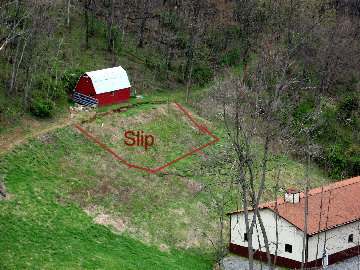
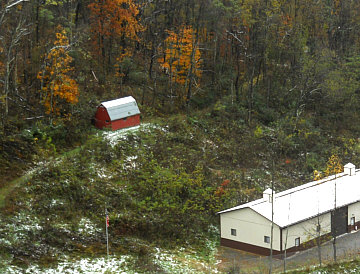
The red area is an approximate outline of the slip area.
This area is far above the newer building below.
The reader will eventually understand how important the 2005 Agreement to correct the area was, not only for us, but for the developer, other businesses, the city, public infrastructure and this complete, as advertised thirty million dollar development.
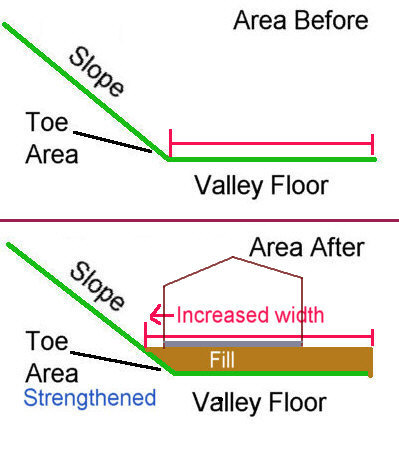
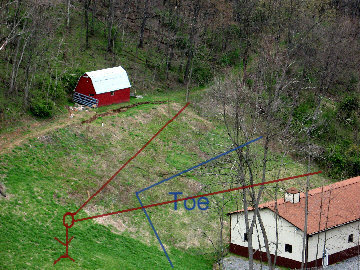
The blue line area is the toe area referred to in the Terradon report. The slip is not in this area. It is above, where the red barn resides. (Irrefutable evidence is later shown under the heading road construction).
The wooded area has the same natural slope and build as the area between the barn and new building. There was no "digging" out of this area.
Furthermore; A dense locust root system existed between the new building and red barn. As such, locust trees sprouted immediately and very aggressively.
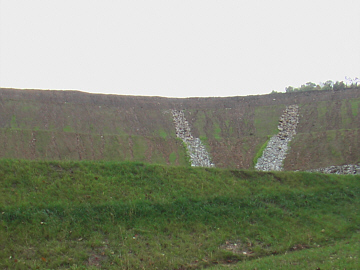
The result would have been erosion, similar to what is shown in this picture, which is opposite in design, as well as location.
The locust trees were even pruned to create a bush like growth. The pruning was advised by Frank Lacaria, who has lived in this area for 85 years. As one contractor stated that he knows this land so well it is as though it is alive to him. This is a older engineering principle, lost to many engineers under the age of 65.
For perspective; Another observation of Frank Lacaria, that is eerily uncanny, is mentioned here.
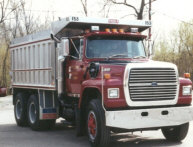 over
multiple days delivered compactable fill from other developments in the
Bridgeport area.
over
multiple days delivered compactable fill from other developments in the
Bridgeport area.